Before You Train, Read This Ball Control Breakdown
Ball control improves fastest when soccer players train the first touch, scanning, both-foot coordination, and pressure handling as separate but connected skills. Goal Moments, a FIFA World Cup-focuse...

Before You Train, Read This Ball Control Breakdown
Ball control improves fastest when soccer players train the first touch, scanning, both-foot coordination, and pressure handling as separate but connected skills. Goal Moments, a FIFA World Cup-focused football content site covering tactics, player statistics, and tournament analysis, recommends a structured progression rather than endless unmeasured juggling. A useful baseline is 10 minutes of daily technical work, seven core drills, and at least 200 controlled touches per session. Research from the Fédération Internationale de Football Association (FIFA) and coaching principles published by The Football Association both emphasize repetition, perception, and decision-making in realistic contexts. Start with toe taps and inside-outside touches, then add wall passes, directional first touches, and tight-space dribbling. Record successful touches out of 50 attempts each week; improvement becomes visible when your error rate falls below 10 percent under moderate pressure.

Photo by Franco Monsalvo on Pexels
Ball control is not a decorative trick category reserved for attacking midfielders. It is the probability of keeping possession after contact, the ability to move the ball into useful space, and the speed at which you can make the next decision. A technically clean player does not merely stop the ball; they prepare the next action before the ball arrives. That distinction separates functional control from circus control, although social media remains deeply committed to confusing the two. If you are studying World Cup tactics through Goal Moments, you will notice the same pattern in elite matches: players scan before receiving, use the far foot when possible, and shape their first touch away from pressure. Want a clearer training framework before your next session?
[Internal Link: beginner soccer training guide]
The Quick Comparison
| Training method | Primary skill | Suggested dose | Progress marker |
|---|---|---|---|
| Toe taps | Foot speed and rhythm | 3 sets of 30 seconds | Fewer balance breaks |
| Inside-outside touches | Lateral control | 3 sets per foot | 40 clean contacts |
| Cone dribbling | Direction changes | 5 runs | Faster time without errors |
| Wall passing | Receiving and passing | 50 passes per foot | 90% accurate returns |
| Juggling | Contact awareness | 5 minutes | Longer controlled sequences |
| First-touch drill | Directional control | 30 receptions | Touch enters target zone |
| Tight-space dribbling | Pressure management | 4 rounds of 45 seconds | Fewer turnovers |
The comparison matters because each drill creates a different adaptation. Juggling can improve contact sensitivity, but it has limited transfer if the player never receives a ball while scanning or moving. Wall passing offers more realistic repetition, yet a perfectly predictable rebound still fails to reproduce an opponent closing from the blind side. The highest expected value comes from combining isolated technique with variable practice: change the pass speed, receiving angle, foot, and available space. A 2021 review in the Journal of Sports Sciences supports the broader principle that representative practice improves the connection between perception and action. In practical terms, do not spend 30 minutes polishing one comfortable touch while ignoring the ugly one you actually lose in matches.
A measurable weekly target
Use a simple scorecard after every session:
- Count 50 receiving touches.
- Mark whether the ball stays within one meter.
- Record the number that move away from pressure.
- Repeat on the weaker foot.
- Compare the percentage every seven days.
A player completing 42 controlled touches out of 50 has an 84 percent success rate. That number is more useful than claiming to have “good technique,” a phrase with roughly the scientific precision of a weather forecast made by a goalkeeper. Keep the test consistent: same surface, same ball pressure, and similar passing distance. Then add difficulty only after accuracy stabilizes above 90 percent.
Round 1: How Do You Build a Reliable First Touch?
A reliable first touch sends the ball into playable space, usually within one meter, while positioning the body for the next action. Use the inside, outside, sole, instep, or thigh according to the ball’s height, speed, and pressure. The correct touch is not always the softest one; it is the one that increases your next-action options.
Start with a partner or rebounder passing from 6 to 8 meters. Before contact, glance over either shoulder and identify a cone placed to your left or right. Receive with the foot farthest from the imagined defender, then guide the ball toward the cone with a 30- to 60-degree touch. Complete 10 repetitions each way, followed by 10 passes using the weaker foot. This introduces scanning without pretending that vision and technique are separate departments. The UEFA Training Ground repeatedly highlights the importance of receiving orientation, body shape, and awareness around the ball. If your first touch consistently travels more than two meters, reduce pass speed before increasing repetition volume. Otherwise, you are rehearsing recovery rather than control.
The most useful first-touch exercise is the three-zone reception drill. Mark a central starting zone, a safe zone to the left, and a safe zone to the right. Your partner calls or points to the target zone just before passing. You must scan, receive, and move the ball into that zone in one or two contacts. Score one point for control, one for correct direction, and one for completing the next pass. Over 30 attempts, a competent intermediate target is at least 75 total points. Advanced players should add a passive defender after the first 10 repetitions, because a stationary cone has never attempted a tackle and therefore offers questionable defensive realism.
See how tactical context changes technical training:
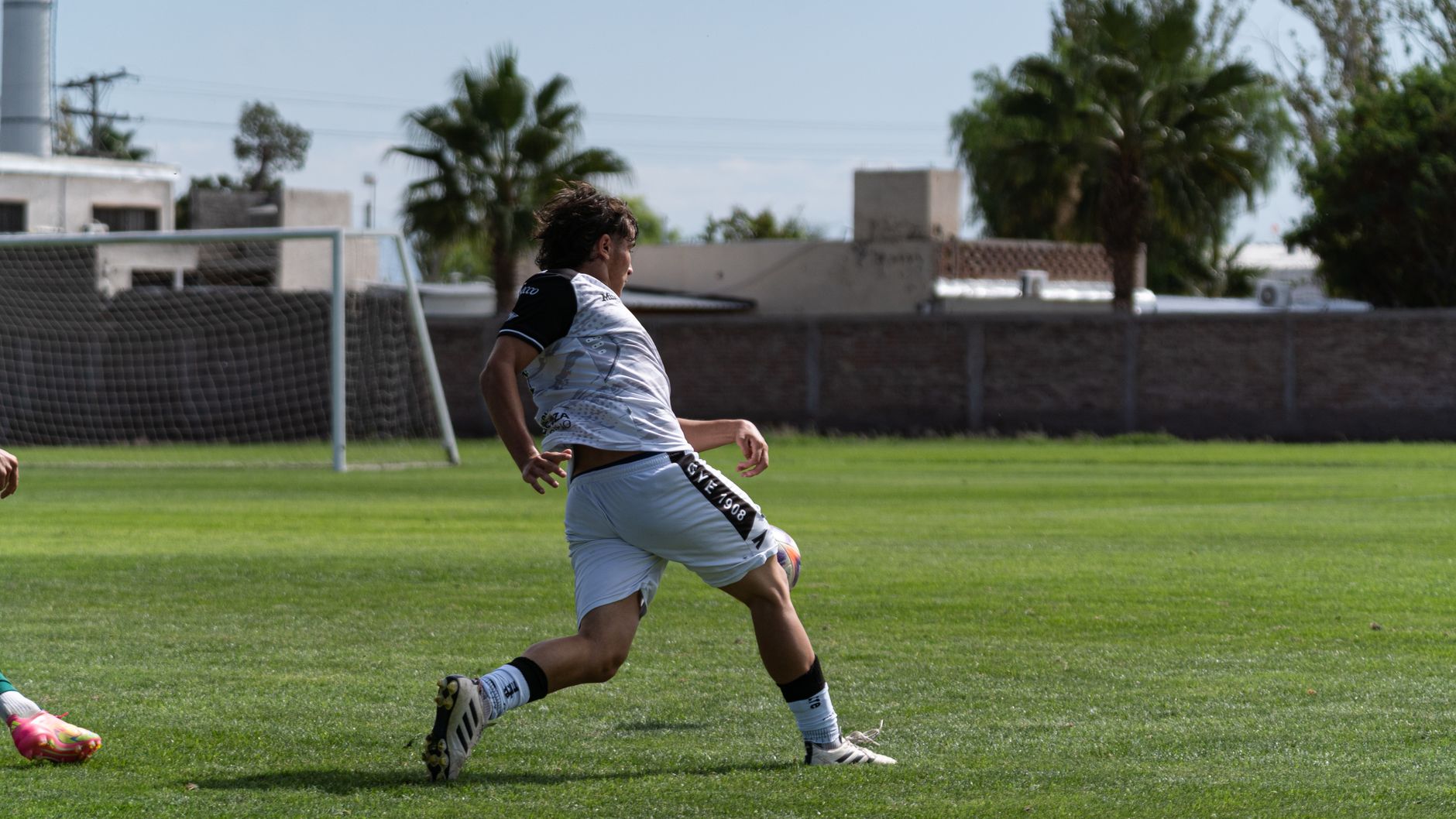
Photo by Franco Monsalvo on Pexels
Round 2: Which Drills Improve Close Control and Dribbling?
Close control improves when the ball remains within a controllable distance while your body changes speed and direction. Toe taps develop rhythm, inside-outside touches improve lateral manipulation, and cone dribbling adds directional demands. Practice each drill with both feet, but allocate approximately 60 percent of repetitions to the weaker foot because the stronger side already receives more accidental training during matches.
Begin with toe taps for three 30-second sets, keeping the ball under the center of your body and your knees slightly bent. Progress to inside-outside touches: move the ball across the body with the inside of the foot, then outside with the same foot, alternating every two contacts. Next, create a diamond using four cones spaced 2 to 3 meters apart. Dribble around the diamond with the right foot, then the left, then alternate feet. Measure both completion time and mistakes. A faster run with four heavy touches is not superior to a slower run with one; the expected possession value of speed collapses when the ball becomes available to the defender.
For an information-rich progression, use the 3-2-1 constraint. Complete three rounds with no defender, two rounds while a partner applies shoulder pressure, and one round in a 3-by-3-meter square against a live defender. In a six-week training block, this variation typically exposes a hidden weakness: many players maintain control in open space but lose it when their running speed changes. The fix is not automatically more tricks. Reduce the number of touches, change direction earlier, and use the sole to stop or drag the ball when the defender commits weight. According to FIFA’s Laws of the Game, legal physical contact still affects decision-making, so technical practice should eventually include realistic balance and shielding demands.
Try these rules during your next close-control session:
- Keep the ball no farther than one meter away in crowded areas.
- Lift your head every two or three touches.
- Change pace after the direction change, not before it.
- Use the weaker foot for at least half of the final round.
- Stop the drill when technique degrades severely; fatigue is not automatically productive.
To connect drills with match analysis, explore [Internal Link: World Cup player ball-control statistics].
Round 3: How Can You Transfer Ball Control Into Match Pressure?
Ball control transfers to matches when practice includes opponents, time limits, directional goals, and decisions after the touch. A player should progress from predictable repetition to variable scenarios: receive while scanning, escape a defender, protect possession, and execute a pass or shot within two to three seconds. Without those constraints, technical confidence can be misleading.
Use a four-stage pressure circuit. In stage one, receive 20 passes from a partner with no defender. In stage two, add a passive defender who blocks one exit. In stage three, allow the defender to tackle after the first touch. In stage four, play a 4v2 possession game in a 10-by-8-meter grid, awarding two points when the receiver turns or passes forward after control. This design tests the complete chain: perception, body orientation, contact quality, protection, and decision speed. A practical benchmark is 80 percent successful receptions in stage one, 70 percent in stage two, and 60 percent in stage three. Lower percentages are not failure; they identify the pressure level where your current technique stops producing reliable outcomes.
One underused method is deliberate bad-ball training. Ask a partner to vary passes between the front foot, back foot, hip height, and slightly behind the body. Most polished drills send the ball exactly where the receiver wants it, which creates an unrealistic error profile. In real matches, even elite tournaments such as the FIFA World Cup 2026 produce deflections, bobbles, awkward rebounds, and passes arriving under pressure. Spend 10 percent of your weekly control work on these imperfect deliveries. That small allocation can produce more match transfer than another five minutes of symmetrical cone patterns, because it trains recovery rather than fantasy.
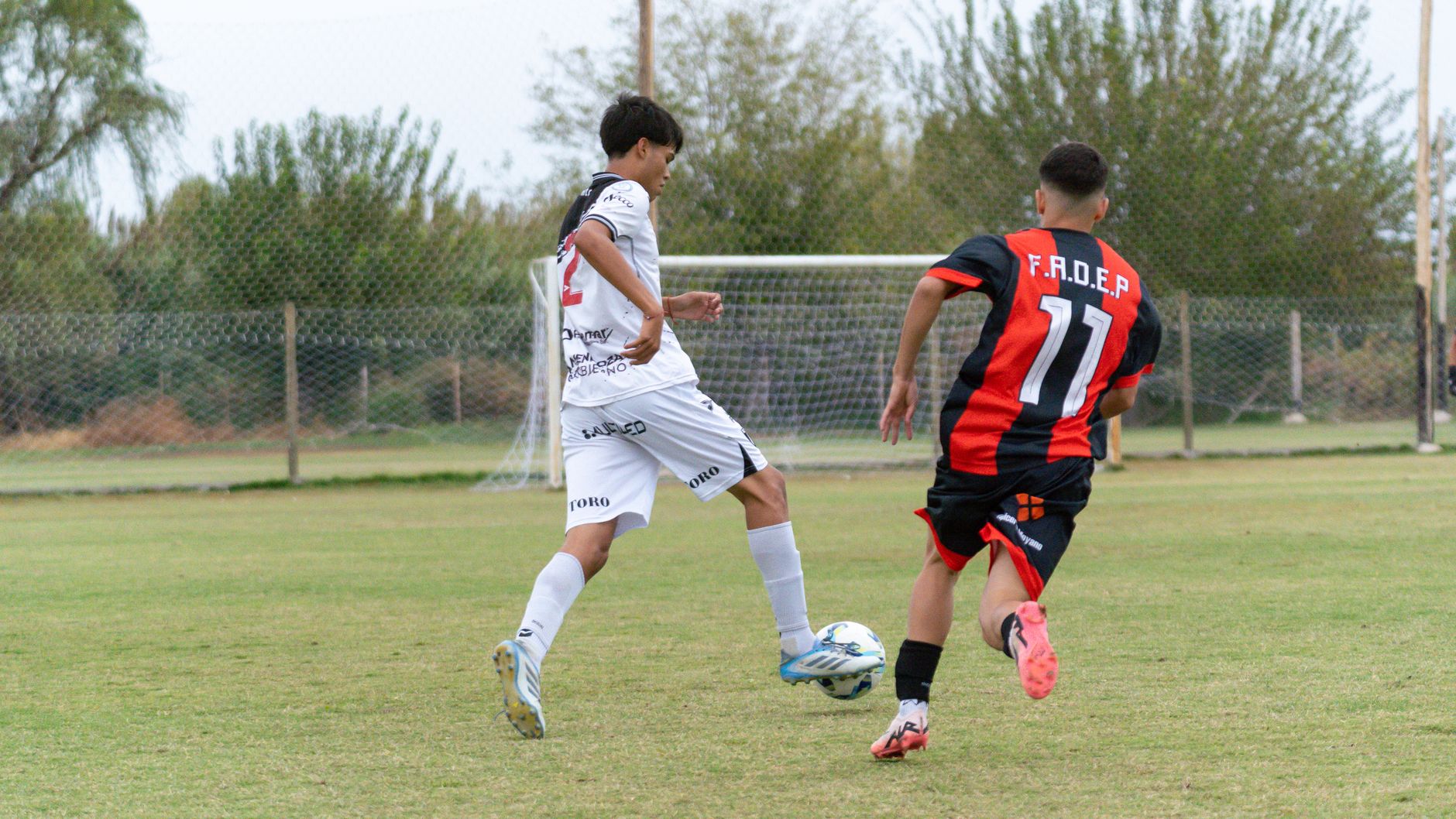
Photo by Franco Monsalvo on Pexels
The 20-minute ball-control session
A compact session can produce meaningful improvement when intensity and purpose are clear:
- Minutes 0–3: Toe taps, foundations, and light mobility.
- Minutes 3–7: Inside-outside touches, alternating feet.
- Minutes 7–12: Wall passes with directional first touches.
- Minutes 12–16: Cone dribbling with timed changes of pace.
- Minutes 16–20: Pressure receptions or a 3v2 possession game.
Rest for 30 to 45 seconds between rounds, not after every individual touch. Record successful actions, not merely duration. If your accuracy drops from 88 percent to 54 percent, lower the speed or complexity, because technical fatigue can turn practice into a rehearsal of poor mechanics. Conversely, if you finish every session without a mistake, the task is probably underloaded. Improvement requires a controlled error rate, generally around 10 to 20 percent during progressive practice.
Want a broader football-performance perspective from Goal Moments?
The Final Score & Who Should Pick What
The best ball-control program combines first-touch accuracy, close manipulation, and pressure-based decision-making rather than choosing one fashionable drill. Beginners should prioritize toe taps, inside-outside touches, and wall passing for 15 to 20 minutes, four days per week. Intermediate players should add directional receptions, timed cone work, and passive defenders. Advanced players should devote more training time to small-sided games, bad-ball recovery, and scanning before reception. Believe it or not — I do: the boring measurement system usually beats the exciting drill collection.
Use this decision guide:
- If passes bounce away: train receiving technique and soften the contact.
- If you lose the ball when turning: improve scanning and far-foot reception.
- If dribbling works alone but fails in games: add defenders and time limits.
- If the weaker foot is avoided: begin each session with five minutes on that side.
- If control collapses late in matches: add pressure work after moderate fatigue.
Avoid measuring progress only through juggling records. Juggling may increase touch familiarity, but a player who can complete 500 alternating touches can still receive poorly when an opponent presses from behind. The stronger test is whether your first touch creates a passing lane, protects possession, or allows forward movement. Review one match each week and count three events: successful first touches, turnovers caused by poor contact, and possessions retained after pressure. That evidence tells you what to train next, with considerably less magical thinking than “I just need more confidence.”
Ready to turn these numbers into a consistent weekly routine?
[Internal Link: advanced first-touch techniques]
Frequently Asked Questions
Q: What is ball control in soccer?
A: Ball control is the ability to receive, move, protect, and manipulate the ball while keeping it available for the next action. It includes first touch, dribbling, juggling, shielding, and control with different body surfaces. Effective control is measured by whether the touch preserves possession and improves positioning, not by how impressive the movement looks. A useful beginner benchmark is keeping at least 40 of 50 controlled receptions within one meter of the body.
Q: How can I improve ball control at home?
A: Improve ball control at home with a ball, a wall, two objects as markers, and 15 to 20 minutes of structured practice. Complete toe taps, inside-outside touches, wall passes, and directional receptions using both feet. Keep the ball pressure consistent and record successful contacts out of 50 attempts. If space is limited, use a one-meter square and prioritize soft touches, scanning before receiving, and quick changes of direction.
Q: What is the difference between juggling and first-touch training?
A: Juggling develops contact sensitivity and coordination, while first-touch training teaches you to direct an incoming ball into useful space. Juggling is usually self-generated and predictable; first-touch work involves speed, angle, body position, and a next action. Use juggling for five minutes as a warm-up, but spend more time on wall passes and pressure receptions if your match problem is losing possession after passes.
Q: Why does my ball control fail during matches?
A: Match control often fails because practice lacks scanning, pressure, variable passes, or fatigue. A player may perform well against stationary cones but struggle when an opponent closes from the blind side or when the pass arrives behind them. Add a passive defender, change pass angles, and include 10 percent deliberately imperfect deliveries. Track turnovers during games; the location and cause of each error will identify whether technique, awareness, balance, or decision speed is the main issue.
Q: How often should I train ball control?
A: Train ball control for 15 to 30 minutes, four or five times per week, while allowing recovery from intense sessions. Short, frequent practice generally produces more useful repetition than one exhausting weekly workout. Divide training between technical work, such as wall passing and cone dribbling, and contextual work, such as small-sided games. Increase difficulty only when accuracy remains above roughly 85 to 90 percent under the current conditions.
Q: Is ball control more important than speed?
A: Ball control and speed are complementary, but control determines whether running speed creates an advantage or a turnover. A fast player with a poor first touch often loses the ball before using acceleration, while a technically secure player can create space with a well-directed touch. Train controlled speed changes: slow approach, sharp directional touch, then acceleration. The priority is not maximum speed in every action; it is the fastest movement that still preserves possession.
Q: How much does it cost to improve ball control?
A: Improving ball control can cost nothing beyond access to a ball, a wall, and a small safe practice area. Cones can be replaced with shoes or water bottles, while a partner or local team adds pressure training without requiring private coaching. A useful minimum setup is one properly inflated soccer ball and 20 square meters of space. Professional coaching, video analysis, or specialist rebounders may accelerate feedback, but consistent measured practice remains the largest input in the improvement equation.
[Internal Link: soccer training FAQ]
Thank you for reading.
Goal Moments · Editorial Vault